
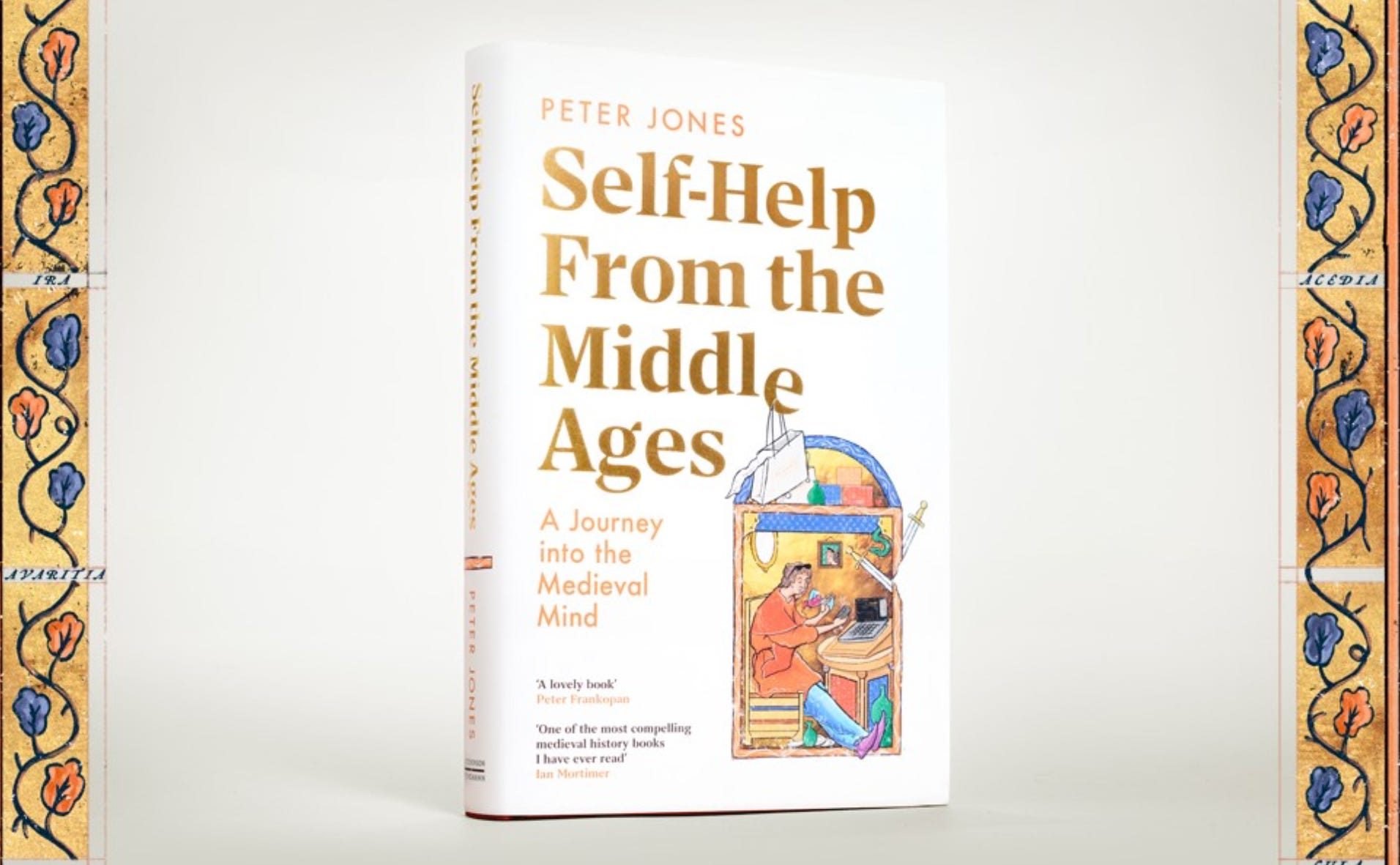
Book Review: Self-Help From the Middle Ages: What Medieval History Can Teach Us About Living a Happy, Healthy Life by Peter Jones.

The premise of this book is really interesting. In our modern world of technology, communication and constant bombardment by data streams it is often difficult to imagine a world without all these things. That this simplicity and its ensuing philosophical and theological analysis has something to teach us is the premise of Peter Jones book and one which I thoroughly enjoyed exploring in this book. The blurb for the book reads:
What can a twelfth-century monk teach us about burnout, envy, or despair? Far more than we might imagine. In Self-Help from the Middle Ages, historian Peter Jones travels through Europe’s archives and libraries to uncover a lost psychology: a world where confession was therapy, sin was diagnosis, and the Seven Deadly Sins served as a map of the human mind.
From the deserts of Egypt to the Vatican Library, from Dante’s Florence to Catherine of Siena’s cell, Jones introduces the thinkers, mystics and rebels who wrestled with the same questions that preoccupy us now: how to live with our flaws, forgive ourselves, and find meaning amid confusion.
Medieval lives and landscapes come vividly alive: Siberian winters and Parisian manuscripts, lustful saints and anxious scholars, candlelit abbeys and vaults of forgotten books. Wise, surprising, and deeply humane, Self-Help from the Middle Ages reveals that the remedies we seek for our 21st-century anxieties may have been with us all along―written in brown Gothic ink on lambskin seven hundred years ago.
The scope of this book is vast but Jones cleverly uses the seven deadly sins as the thread which ties the different periods, and evidence together. He uses them as the means by which human flaws were diagnosed and explored by various medieval scholars - both religious and secular.
The book begins by looking at Pride, the least deadly, according to the author, and one of which most are guilty in one way or another, and Jones discusses the nature of Lucifer, with a light and humorous touch - the idea of a smug Lucifer made me smile. The works and lives of men such as Dante and Bacon are also brought in. Although the tone is light the research behind it is not, there is some serious scholarship here notably in the exploration of linguistic terms and the close analysis of symbolism, such as that in the Holkham Lucifer.
Images are cleverly interspersed throughout allowing the reader to see some of the images which are being discussed - something which I very much enjoyed.
Anyone who knows me knows that I do not like the ‘personal narrative’ writing style - simply personal preference - and I won’t like there is a lot of that here. However there is also enough history and clever analysis for me to be able to overlook it.
As we work through the sins one of my favourite sections of this book is that which deals with anger. Specifically the case of Judith and Holofernes - the images of the six avenging Judith’s is amongst my favourite in the book and they each depict Judith’s anger in different ways. The author goes on from this to look at the nature of anger, and how it was considered in the Middle Ages - and if there are any lessons we can learn from their approach to dealing with it.
There are many characters from history and incidents both humorous and tragic which are explored and I raced through the book. The whole book is very well referenced - the bibliography is huge! - and I was really thrilled to find several sources I had not heard of listed, and the way the author references them is clear, meaning that they are easy to find.
All in all I really enjoyed this book, and thought it was a really new and interesting way to look at the Middle Ages. I also feel that there are real lessons to be learned here, for example that the idea of forgiveness, so prevalent in the medieval period, - and often so lacking today - is one that we should all be reminded of.
⭐️⭐️⭐️⭐️⭐️
Downloaded this a few weeks back and was already next up on my tbr list. I agree with your point about personal narrative - it can be hit and miss, depending on the author and angle. Pleased to say, your review hasn’t put me off, lol.
I loved this book! As you say, it’s got a really interesting approach.