
On this day
12 July 1536

On this day in 1536, the greatest scholar of all time died in Basel. As he lay dying, in the company of friends, he reportedly uttered the words ‘Liber Gott’. His name was Desiderius Erasmus and his impact on education and religion continued long after his death.
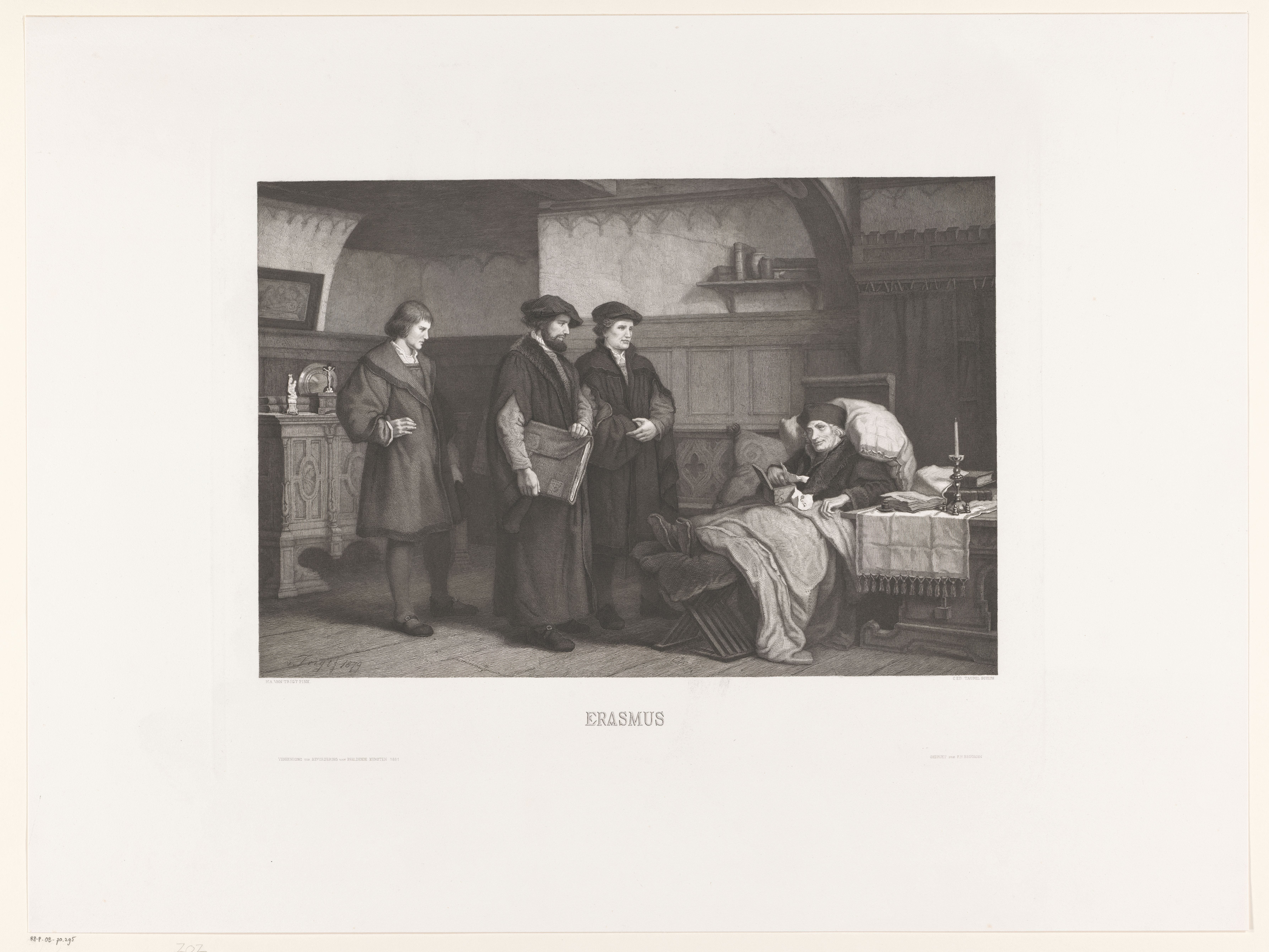
There is a wealth of literature and letters left to us by Erasmus providing an excellent insight into the changes in education and religion during his lifetime but today we are focused on his death. Erasmus had outlived the majority of his long-term friends, including Sir Thomas More, John Fisher, Johann Froben, and William Blount, 4th baron Mountjoy. It was to the latter that we owe credit for bringing Erasmus to England, a country he fell in love with and became an integral part of a close knit circle of humanist scholars.
Throughout his life he had been friends with kings, cardinals and popes but also made a lot of enemies. For the last years of his life he stood alone amidst a tempest of religious turmoil; both the Lutherans and the Catholic Church wanting him to declare in their favour, and attacking him when he refused. He was often called a coward for not choosing a side but I believe it takes great strength to stand alone with one’s beliefs and opinions.
Erasmus remained a Catholic to his dying day but he did believe the Church required reform, though not to the extent Martin Luther had argued. Erasmus believed the Church should put more effort into the education of youth, that the Church should never impose a charge for issuing indulgences, and the wealth of the Church should be used more efficiently than making men rich. Without going off on a tangent his work Praise of Folly essentially explains exactly what he thinks about the Church in a satirical fashion.
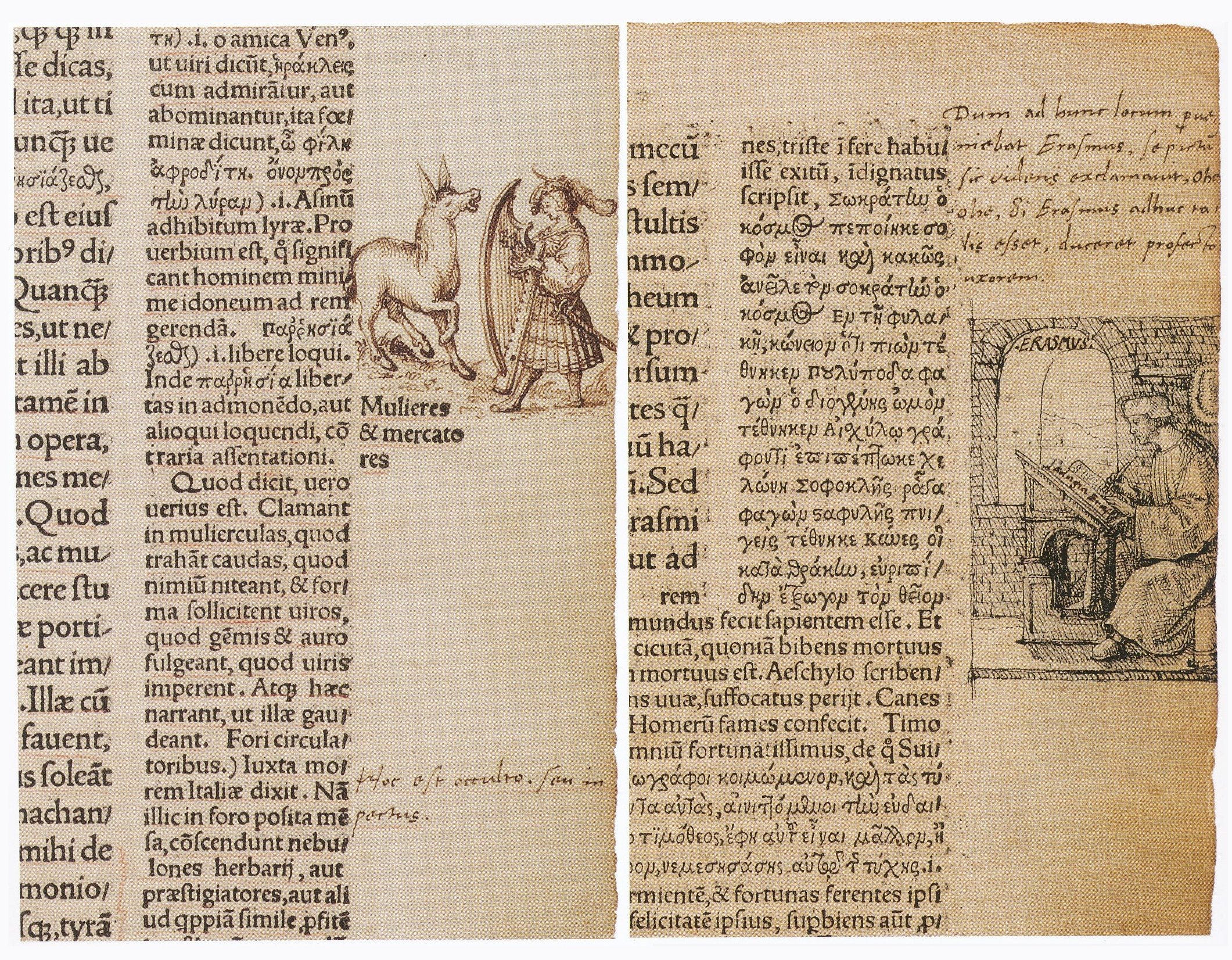
Two of his most controversial works which resulted in criticism were Praise of Folly, and Novum Testamentum. In writing the latter of the two, Erasmus had taught himself Greek, then compared the Vulgate Bible against Greek manuscripts and argued that there had been errors throughout the years. An unsurprising claim when a work is copied over and over, all humans make mistakes. Erasmus sought to publish a corrected version in both Latin and Greek. When he published the work he faced immediate criticism; theologians argued that a grammarian should not be correcting a Bible, whilst some men of the Church were outraged at the mere suggestion the Bible had errors.
Despite the criticism Erasmus continued with further editions, correcting his own errors but his largest battle was to come, the debate with Martin Luther, but that’s another story.
In the last years of his life Erasmus spent time much of his time writing and travelled back to Basel, a city he had come to know and love, where he was welcomed as family by friends. He spent most of 1536 in his chambers but it became clear he was nearing his end. On 12 July 1536 he passed away, gone was the greatest Renaissance mind. His friend Beatus Rhenanus wrote:
The arthritis, with which he had been afflicted at Freiburg, so confined him to his bed until nearly the following autumn that he rarely left his chamber, and only once was he outside of his room. And yet in such torturing of his limbs he never ceased to write whenever he felt the least respite, as is proved by his little commentary On the Purity of the Christian Church, and this present revision of Origen. But his powers diminishing little by little, for he had suffered almost a month with dysentery, he at length perceived that his end was near; and so, surrounded as ever by those visible and eminent testimonies to his Christian patience and his devout mind by which he witnessed that he had fixed his hope on Christ, crying out constantly, ‘Mercy, O Jesus, Lord deliver me, Lord make an end, Lord have mercy on me,’ and in the German language, ‘Lieber Gott,’ that is ‘Dear God,’ on the twelfth of July near midnight, he died.
He may have been gone but his influence lived on. Today his works are read all over the world just as he said they would be when he wrote, ‘my books will be read in every country in the world’.
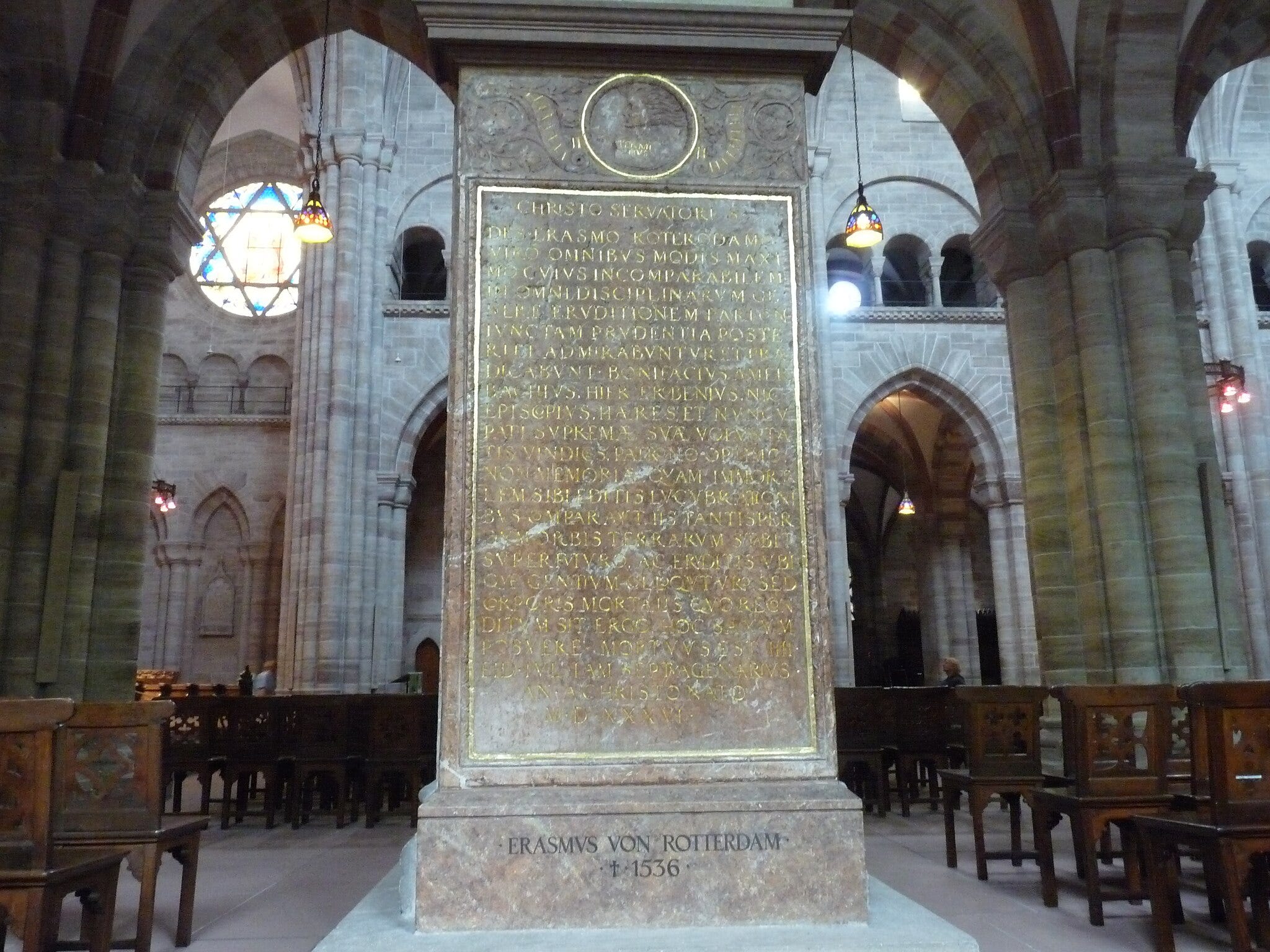
He was buried near the steps of the choir in Basel Cathedral where his tomb survives today.
Have you read any of Erasmus’ works? If so, which is your favourite?
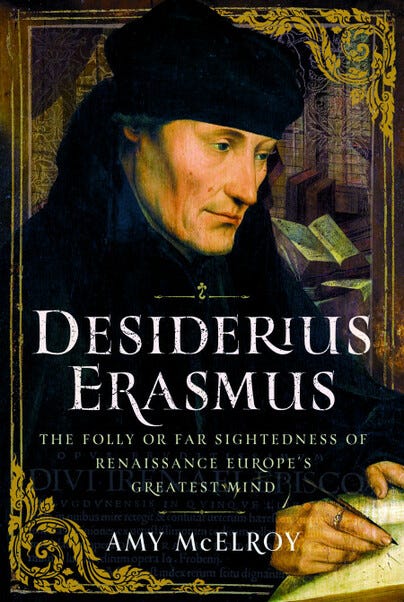
Erasmus is the subject of my latest book, Desiderius Erasmus: The Folly or Far Sightedness of Renaissance Europe’s Greatest Mind. If you would like to read more about the fascinating life of this scholar, please pick up a copy!
Erasmus was an important mind and a much-needed voice of moderation in a time of religious turmoil.